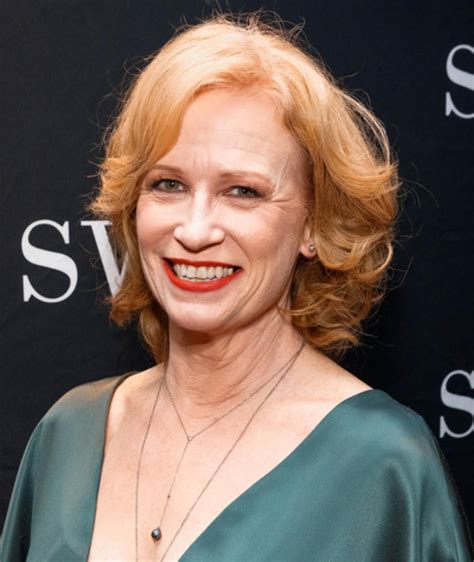
Elizabeth Helen Blackburn, a prominent figure in molecular biology, has made significant contributions to our understanding of cellular aging and cancer through her groundbreaking research on telomeres and the enzyme telomerase. Awarded the Nobel Prize in Physiology or Medicine, Blackburn's work has been pivotal in advancing our knowledge in these areas. This article delves into her life, career, and notable achievements, offering a detailed perspective on her influence in science..
Quick Information
Early Life and Education
Born on November 26, 1948, in Hobart, Tasmania, Elizabeth Blackburn's passion for science was evident from an early age. Supported by her family, she pursued a Bachelor of Science at the University of Melbourne in 1970, followed by a Ph.D. at the University of Cambridge. At Cambridge, she worked in the MRC Laboratory of Molecular Biology under the mentorship of Frederick Sanger, whose influence was instrumental in shaping her future research..
Career Milestones
The Discovery of Telomerase
In 1984, while at the University of California, Berkeley, Blackburn and her graduate student Carol W. Greider discovered telomerase. This enzyme plays a crucial role in maintaining the length of telomeres, which are essential for cellular division and longevity..
Nobel Prize Recognition
The significance of Blackburn's work on telomerase was honored in 2009 when she, along with Greider and Jack W. Szostak, received the Nobel Prize in Physiology or Medicine. Their research has provided fundamental insights into cellular aging and cancer..
Impactful Tenure at UCSF
During her tenure at the University of California, San Francisco (UCSF), Blackburn furthered her research on telomeres and telomerase, enhancing our understanding of cellular biology and solidifying her status as a leading scientist in her field..
Personal Life and Advocacy
Married to John W. Sedat, a fellow scientist, Blackburn balances her personal and professional life. She has been a vocal advocate for ethical practices in scientific research, notably during her tenure on the President's Council on Bioethics from 2002 to 2004. 2004.
Legacy and Ongoing Influence
Blackburn's research extends beyond her Nobel Prize-winning discovery. Her work has significantly advanced our understanding of the mechanisms behind cellular aging and has implications for age-related diseases and cancer therapies..
The Telomere Effect
In 2017, Blackburn co-authored "The Telomere Effect" with Elissa S. Epel. The book discusses how lifestyle choices impact telomere length and, consequently, cellular aging, making complex scientific information accessible to a broader audience..
Continuing Impact
Although retired from active research, Blackburn remains a prominent figure in the scientific community, advocating for ethical scientific practices and influencing ongoing research in molecular biology..
Conclusion
Elizabeth Blackburn's pioneering research has not only enhanced our understanding of cellular aging and cancer but also continues to influence new generations of scientists. Her legacy in molecular biology is a testament to her dedication and groundbreaking discoveries..
Frequently Asked Questions
Q: What is Elizabeth Blackburn famous for??
A: Elizabeth Blackburn is renowned for her discovery of telomerase and her extensive research on telomeres..
Q: When did Elizabeth Blackburn receive the Nobel Prize??
A: Elizabeth Blackburn was awarded the Nobel Prize in Physiology or Medicine in 2009. 2009.
Q: What is the focus of the book "The Telomere Effect"?"?
A: "The Telomere Effect," co-authored by Blackburn, explores how lifestyle choices affect telomere length and cellular aging..
Q: Where did Elizabeth Blackburn conduct her pivotal research??
A: Her significant research was carried out at the University of California, San Francisco (UCSF).).
Q: What is Elizabeth Blackburn's estimated ??
A: As of 2026, her estimated net worth is around $5 million..
Elizabeth Blackburn's journey from Tasmania to becoming a Nobel laureate highlights her profound impact on science and her ongoing influence in the field of molecular biology..
You might also like
Biography10 10 February 23, 2026 23, 2026